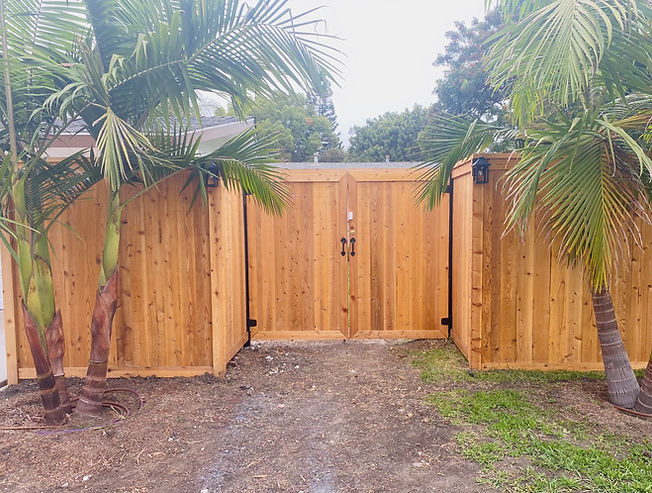
Redwood and cedar are undeniably the two most popular wood choices for fences in Southern California. One of the most common questions our expert fence team hears is: which one is better? The answer ultimately depends on your specific priorities—whether that's cost, longevity, stability, or aesthetics.
Quick Comparison
Cost Winner
Cedar - Typically 20-30% less expensive
Longevity Winner
Cedar - With proper maintenance (with one exception: redwood heartwood)
Stability Winner
Redwood - Less warping and twisting
Appearance
Personal Preference - Both are beautiful
Detailed Analysis
Cost Considerations
Cedar is generally more affordable, making it an excellent choice for budget-conscious homeowners who still want quality. Redwood commands a premium price due to its superior characteristics and limited growing regions.
Average Cost Difference (per linear foot):
Cedar: $25-40 | Redwood: $35-60
Longevity & Durability
Both woods contain natural oils that resist rot and insects. Cedar generally outlasts redwood in most applications, especially with regular maintenance. However, old-growth redwood heartwood is the exception—it can last 50+ years due to its extreme density.
Expected Lifespan (with maintenance):
Cedar: 20-30 years | Redwood: 15-25 years (50+ for heartwood)
Stability & Movement
Redwood wins here. It's more dimensionally stable, meaning it warps, twists, and shrinks less than cedar over time. This is especially important in horizontal fence applications where straight boards are critical for the aesthetic.
Appearance & Color
Cedar offers lighter, golden tones with some reddish streaks. Redwood provides rich, deep red-brown hues. Both age to a silver-gray if left untreated. The choice comes down to your design vision.
Cedar: Pros & Cons
Pros
- More affordable pricing
- Lighter weight, easier to work with
- Better resistance to moisture and decay in most climates
- Pleasant aromatic scent
- Natural insect repellent properties
- Wide availability
Cons
- More prone to warping and twisting
- Knots can be more prominent
- Requires more frequent maintenance
- Color fades faster without treatment
Redwood: Pros & Cons
Pros
- Superior dimensional stability
- Fewer knots, cleaner appearance
- Rich, deeper color tones
- Excellent natural weather resistance
- Premium appearance that holds value
Cons
- Significantly higher cost
- Limited availability outside West Coast
- Heavier, requires more support
- Environmental concerns with old-growth
Key Takeaways
- ✓Choose Cedar if: Budget is a primary concern, and you're willing to maintain it regularly
- ✓Choose Redwood if: You want minimal warping, a premium look, and can afford the investment
- ✓For horizontal fences: Redwood's stability makes it the preferred choice
- ✓Maintenance matters: Both woods benefit significantly from regular staining/sealing